Film Acting
Weekly Classes


Start date: Every Monday & Tuesday

Duration: from 18:00 to 22:30

Language: English
Start date
Every Monday - Tuesday from 18:00 to 22:30
Location
Paris, 75011
LANGUAGE
Classes are in English, but you're welcome to work in your preferred language
Attendance
Maximum 10 participants per class
LEVEL
Suitable for beginners, intermediates, and professionals; coaching is tailored to the actor’s individual needs and skill level
Workflow
film acting technique, film analysis, monologue and scene crafting, on-camera shooting, and guest workshops with industry professionals
Who is it for?
For actors: Ideal for those who want to sharpen their on-camera skills and set dynamics, or prepare effectively for auditions and roles.
For directors: Designed to strengthen communication with actors and deepen understanding of acting techniques to draw out compelling performances efficiently.
Why join?
For film actors, the camera is their primary instrument—just as essential as a musical instrument to a musician. Improving on-camera work requires hands-on experience and the opportunity to watch and analyze your own work. Confidence is built through consistent practice, real feedback, and deep understanding of the medium.
You’ll develop a practical sense of how to live truthfully in front of the camera, with greater self-awareness, and the ability to connect authentically with scene partners.
The training is approached from the director’s point of view—offering a unique lens that expands your artistic insight, sharpens your instincts, and deepens your appreciation for acting and filmmaking.
Entry Requirements
Age: All applicants must be 18 years or older at the start of the program.
To submit: Please provide a CV and, if possible, a showreel.
Audition: Participating in an audition is mandatory to ensure the safety, quality, commitment of all members within the group.
WHAT WILL YOU PRACTICE?
The emphasis is on crafting detailed, sincere, and multi-layered takes. You will develop a comprehensive understanding of angles, lenses, distances, camera movements, shot sizes, continuity, and their impact on scene composition — as well as how these elements influence acting, and vice versa. Valuable insights into best practices and pitfalls for every setup and take will be consistently provided.
Additionally, you will learn techniques to rapidly and effectively prepare in professional environments with minimal rehearsal time and distracting elements.
Film acting is mostly intimate and solitary work — where your medium close-up becomes a private, personal space. Cinema is the art of sculpting in time: shaped by meticulous choices, calculated risks, and the baring of souls. You better be prepared.
Rehearsals are filmed, watched, and analyzed.
Thematic overview

Screenplay analysis
Character creation
Techniques to access emotions on cue
Voice training
Presence and mindfulness in performance
Strategies to manage physical and emotional tension, fear, stress and anxiety (on & off camera)
Body awareness
Breathing techniques
Film analysis
Developement of interpersonal communication on set

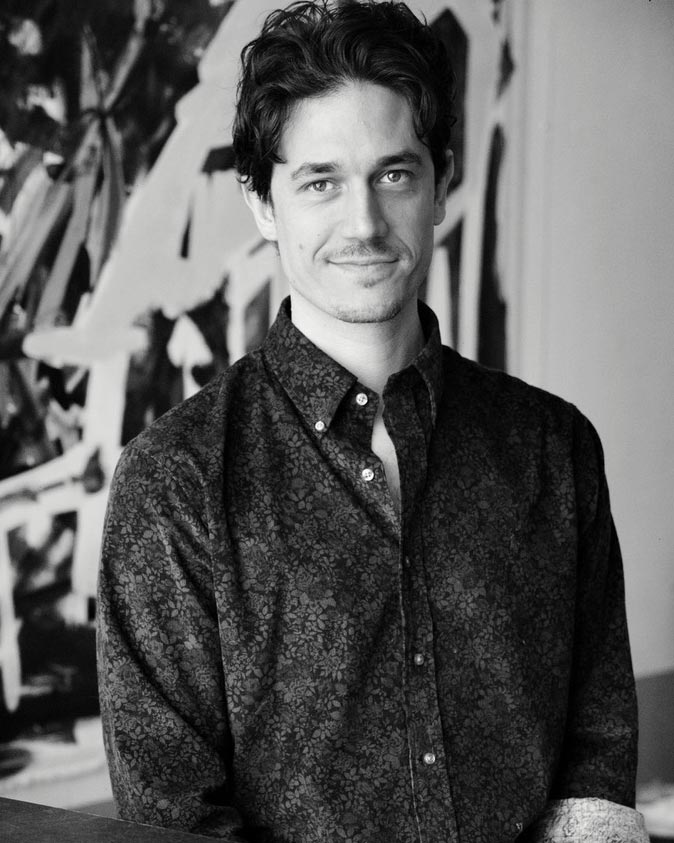
Antonio
Ghio
director,
author.
Graduated from the American Academy of Dramatic Arts in New York, Antonio has over 15 years of experience working on set and coaching actors. His teaching is driven by a deep curiosity to develop effective tools that help actors engage with the camera more clearly and truthfully. He finds creative inspiration in shooting on 16mm film, writing, and practicing Noh theatre. He also holds a special reverence for Japanese Golden Era cinema — Seijun Suzuki is basically the director whose name he dare not take in vain.






Monday OR Tuesday
from 18:00 to 22:30
Book your audition →
info@agarte.studio
Agarte Studio →


 English
  French