
Film Acting
Coaching
Screen-specific preparation for film and series actors, from role prep through shoot.
Actors preparing
a role
Auditioning or cast for a feature, short, or series — needing focused, screen-specific prep on the character, scenes, accent, or relationships before the shoot.
Productions seeking an on-set coach
Directors and producers who want a coach available between takes for child actors, non-professionals, foreign-language performance, or technically demanding scenes.
Working actors maintaining technique
Established actors who want a private, ongoing space to train the instrument, work in new languages, or stay sharp between contracts.
Services
Three engagement formats.
Tailored to the project. Never off-the-shelf.
Role Preparation Package
Multi-session deep-dive on a specific role, ahead of the shoot.
- Script and character breakdown, beat by beat
- Scene work, relationship work, table reading
- Voice, accent, and language coaching where required
- Audition prep, self-tapes, callback strategy
- Final-week run-throughs in studio or remote
On-Set Coaching
On location, in studio, or remote. From a single shoot day to the full schedule.
- Coverage between takes, in the actor's ear
- Director liaison and continuity of intention
- Specialist support for child actors and non-pros
- Language coaching on set (FR / EN / IT)
- Travel available across Europe
Private Sessions
For working actors — ongoing, by the hour, in Paris or remote.
- Scene work and cold-reading practice
- Technique maintenance (Morris / Florent lineage)
- Self-tape direction and feedback
- Working in a second language
- Sliding scale considered for students
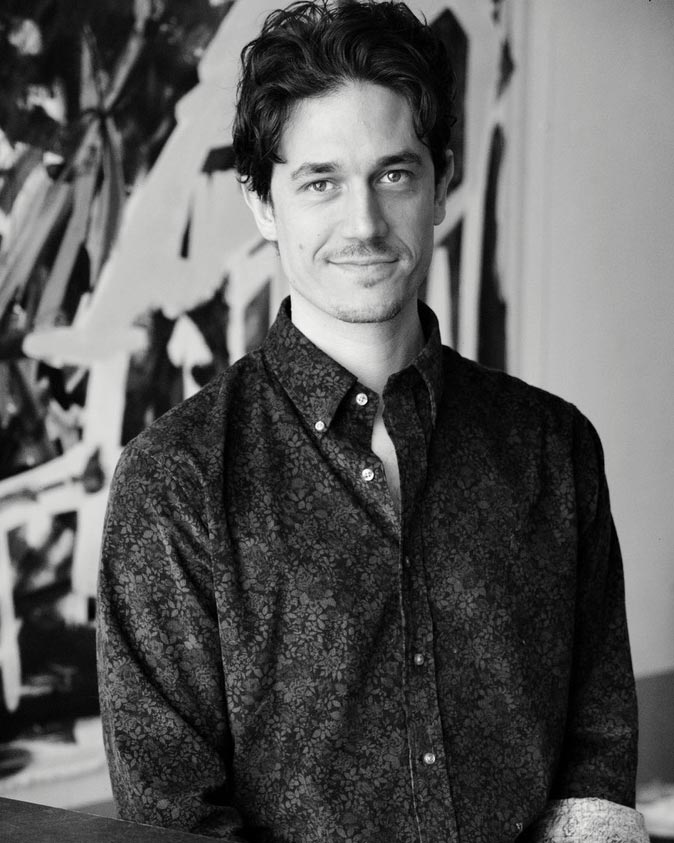
Antonio
Ghio
director,
author.
He combines self-discovery with practical expertise, offering a dynamic and insightful perspective to actors and directors. He also creates narratives for cinema and theatre. When he's not working, Antonio loves spending time walking in Paris, shooting 16mm films, practicing Noh theatre and thai boxe. He shares his passion for acting and directing by teaching modules and masterclasses at Cours Florent and Sorbonne Université. He’s the founder of the Agarte Studio.









FAQ
What sets Agarte Studio apart?
Agarte Studio opened in January 2024. The experience behind it goes back much further: more than 25 years in the field and 15 years of teaching, with hundreds of actors trained.
The focus is exclusively camera work, and it is ongoing. Not because it takes years, but because the only way to get better in front of a camera is to be in front of one repeatedly, watch the result, and change something. A course ends. The work doesn’t.
This is how the studios Antonio trained in worked in New York and Los Angeles. Membership is monthly, not a program with an enrolment date, so an actor can train between jobs and step back when a job comes. Continuity replaces the calendar.
It is also a training ground for directors. An actor drawn to the directing side, or a director who wants a practical grasp of what actors actually do, will find the same room useful for opposite reasons.
Groups stay small and students are chosen individually, so that everyone in the room is working at the same level of commitment even when they are at different levels of experience. That is what makes a beginner and a working actor productive in the same class. The studio will stay small for the same reason.
Agarte Studio is officially Qualiopi certifierd.
Qualiopi is not a formality you sign up for. It is earned through a full audit against France’s national quality framework, the Référentiel National Qualité, covering how the training is designed, delivered and evaluated. Every part has to be evidenced, and the certification has to be maintained.
An independent studio is held to the same standard as the large institutions. Agarte Studio meets it.
Intermittents du spectacle can train here through AFDAS funding.
Why would a working actor keep training?
From ‘The Empty Space‘ by Peter Brook.
“After he reaches a certain position the actor does no more homework. Take a young actor, unformed, under developed, but bursting with talent, full of latent possibilities.
Quite rapidly he discovers what he can do, and, after mastering his initial difficulties, with a bit of luck he may find himself in the enviable position of having a job which he loves, doing it well while getting paid and admired at the same time. If he is to develop, the next stage must be to go beyond his apparent range, and to begin to explore what really comes hard. But no one has time for this sort of problem. His friends are little use, his parents are unlikely to know much about his art, and his agent, who may be well-meaning and intelligent, is not there to guide him past good offers of good parts towards a vague something else that would be even better. Building a career and artistic development do not necessarily go hand in hand; often the actor, as his career grows, begins to turn in work that gets more and more similar. It is a wretched story, and all the exceptions blur the truth.
How does the average actor spend his days? Of course, it’s a wide range: from lying in bed, drinking, going to the hair dresser, to the agent, filming, recording, reading, sometimes studying; even, latterly, toying a bit with politics. But whether his use of time is frivolous or earnest is beside the point: little that he does relates to his main preoccupation – not to stand still as an actor – which means not to stand still as a human being, which means work aimed at his artistic growth – and where can such work take place?”
How do the meetings with industry professionals work?
Once a month a working professional comes to the studio: a casting director, an agent, a producer, a director. It is part of the weekly classes.
These are not networking events. You work in front of someone who casts, finances or directs films, and you hear how it read from their side of the table. That is difficult to get any other way, and it changes how an actor prepares.
Nothing is promised. The studio does not represent actors and does not place them in productions. What you take from the meeting is yours to build on.


 English
 French