The Studio Our Philosophy Meet the Director Technique Program Testimonials Faq Contact

Film Acting
Training Ground
in Paris

“The only way to understand a character is through yourself.”

Elia Kazan

Notes on directing
01

About
the studio

A unique training ground for actors and directors

Agarte Studio is a film acting training ground. Not a school. The distinction is practical: there's no fixed sequence and no program to complete. The work starts from the actor in front of me and changes as they change.

The work starts with what I see. I see what you avoid, what you reach for when you're afraid, what you've already solved and what you're still protecting. Then I push there. Skill comes with repetition. Taste takes longer, and it only comes from being pushed where you would not go alone.

Every actor at Agarte Studio is trained from the director's point of view. You will understand what happens on the other side of the lens, because it determines everything about your work: focal length, shot size, where the camera moves and why, how light is shaped around you, what survives the cut. Once you understand this, you stop guessing and start making creative choices. It is the difference between waiting to be directed and arriving with something to offer.

You will not be judged here and you will never be measured against the person next to you. But not judging you does not mean praising you. My job is to make you technically capable, which means telling you clearly what isn't working and telling you again if it hasn't changed. You are never under scrutiny. The work always is.

Groups are deliberately small, a maximum of eight per class. New students meet me and work before being invited to join, so that the room is made of people who are ready.

Weekly classes are mixed: beginners and working actors train together, because the work is individual and everyone has their own strengths and weak points to focus on. Beginners see what experience actually looks like up close, and experienced actors are reminded of what they stopped questioning.

How far this goes is not decided by me. It's decided by how honest you're willing to be in front of the camera, and how precise.

Antonio Ghiō
Agarte Studio Director

Please contact us to get the instructions for the audition.
02

Our
philosophy

Of personalized coaching

A take is permanent. What it records is the actor's full capability at that exact moment, and nothing more: everything they had built by then, everything they could reach that day, fixed and unchangeable. The work is to widen what can be reached by the time the camera rolls.

Acting lives between opposites. Technique and instinct. Control and spontaneity. A scene written in advance that has to happen as though for the first time. None of these resolve, and an actor doesn't choose between them. The craft is holding both and making the result look spontaneous. Pure spontaneity is a myth. What looks unrehearsed on screen was built to arrive that way.

The work moves through three areas. Rarely in that order:

Find out more

Stage one: Self-knowledge

Before being actors, we are human beings, and we carry what human beings carry: tensions we didn't choose, mistrust we learned somewhere, judgments we turn on ourselves without noticing. These shape how we stand, how we speak, what we allow ourselves to show. In daily life they become a kind of character we play without meaning to.

Recognising these habits is where the work begins. Not fixing them, not erasing them, but knowing them well enough to use them. An actor who knows their own tensions can put them to work. An actor who doesn't gets led by them.

There is a fairly clear process for building a character from a page. What takes longer is the quality of execution in front of the camera, and that comes from technique and confidence. Neither of these can be handed over in a lesson. A principle can be explained quickly, but it only becomes usable through time, and most attempts don't work. That's the part that requires patience.

Stage two: Emotional precision

Whether an actor should be emotionally engaged has been argued for centuries. In practice the question doesn't hold, because a person in front of a camera is always feeling something. The only real question is whether the emotion the actor is feeling matches the character's needs or not.

The work is about being able to feel fully without being overwhelmed, so that emotion serves the scene instead of becoming the subject. That capacity is built, not found.

The body needs to be trained and relaxed. The mind needs to stay clear enough to make decisions. Everything then has to be translated through the body, because that is what the camera reads.

An audience can tell the difference between what is true and what is performed, even when they cannot say how. That is why the screen asks for accuracy of feeling as much as accuracy of technique.

Stage three: Your own way

Every actor arrives with a different shape. One has natural presence but cannot reach emotion. Another feels everything and loses the voice. Another needs to find their way into the text. The work is not the same for these three people, and treating it as though it were is what wastes years.

So the coaching is individual, and the emotional life of the actor is handled with care. What gets built is the ability to listen, to observe, to stay present, and to trust intuition enough to act on it, all of it calibrated to the shot size, the lens and the light. At that point technique stops competing with feeling and starts working with it.

The aim is to be free inside the restrictions, which is what technique is actually for.

03

Meet the Director

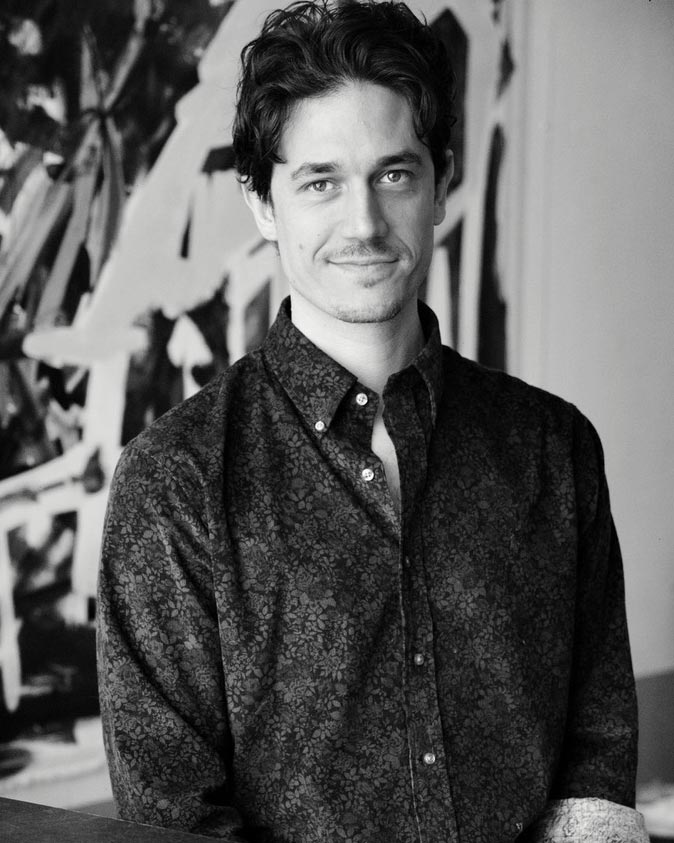
Antonio Ghiō - Acting Coach / Director / Screenwriter

INT. DAY - MORNING - AGARTE STUDIO

Antonio started acting at the age of 13 in a little town in the north west of Italy. As an Alumni at the prestigious American Academy of Dramatic Arts, he is classically trained in Stanislavsky system, Meisner technique, Anne Bogart’s Viewpoints, Tadashi Suzuki’s method. In Los Angeles, Antonio deepened his craft by closely working under the direct guidance of most beloved and respected acting coach Eric Morris. In Tokyo Antonio trained in classical Japanese Nō theatre, in the Kita School style.

ANTONIO:

As an actor, over time, I've come to prefer the freedom of the rehearsal process over performing. Directing has allowed me to live in an endless rehearsal space, and teaching for the past fifteen years has taught me how to be effective in materializing a vision.

Inspired by the work of Kazan, Bolevslavsky, Meyerhold and A.S. Neill, among other wonderful pedagogues, he started developing a personal and modern vision on teaching the evanescent craft of acting. After years of theatre practice, staging his own plays and directing other’s, he moved behind the camera.

ANTONIO: (CONT' D)

I believe cinema, similarly to poetry, reveals what cannot be expressed in words. In an ideal world, movies would be the primary communal experience to broaden our understanding of life. Images hold the key to everything.

He worked in South Korea, USA and Europe. He shares his passion for acting and directing by teaching modules and masterclasses at Cours Florent and Sorbonne Université. He’s the founder of Agarte Studio.

ANTONIO: (CONT' D)

I’m fond of Seijun Suzuki’s vision, Nagisa Ōshima’s style, la commedia all’Italiana, Sam Shepard’s work, Tampopo and Blade Runner. In my spare time, I cherish shooting 16mm film.

04

TECHNIQUE

Akira Kurosawa said that Toshiro Mifune could convey in three feet of film what most actors needed ten feet to convey. He described it as a speed of expression he had never encountered before.

That precision was not a matter of temperament. When films were shot on celluloid, every take cost money and meters of film, and actors worked knowing it. In the digital era, where takes are effectively unlimited, that pressure has disappeared and the skill it produced has largely gone with it. At Agarte Studio we train to restore it.

An actor who can arrive at the essential quickly is a confident actor. Confidence is built on one of two things: ignorance or competence. Training takes the first away, permanently. What follows is a period of doubt, and it lasts until the second is built. That period is where real self esteem gets built. Enduring it is the real, fruitful work.

Our work focuses on:

Find out more

Breathing & Creative Movement

Breathing happens through the diaphragm, a muscle sitting just below the lungs. Under stress it tightens, and an untrained diaphragm tightens further and faster. Breathing is also the only involuntary function we can take deliberate control of, which makes it the most direct access an actor has to their own state. To breathe is to be present.

Movement and breath are bound together; neither exists without the other. Moving outside daily patterns is how an actor gets access to behaviour that isn't already theirs. We train breath and movement to build awareness, attention, and the freedom to change at any moment.

Voice & Prosody

The voice carries more than the words. Vocal cords give the words, the diaphragm gives the state underneath them, and the grain of the sound tells the listener how the speaker actually is. Cinema is a visual form, but the moment dialogue is spoken the actor has to find the meeting point between their own emotional life and the character's words. That meeting point lives in prosody: rhythm, pitch, where the stress falls, what gets held and what gets thrown away. It is where the line stops being text and becomes life.

Character Development

First there is a person, who becomes an actor. Then the actor takes on a role. Characters are often nothing like the people playing them, and closing that distance takes technique, not willpower. The work is to make an unfamiliar nature operate as a second nature: specific, committed, and no longer visible as effort. What reaches the screen has to be a human being, not a construction.

Emotional Availability

Interesting screenplays engage an audience at an emotional level, and they do it on a schedule. An actor has to be able to become emotionally available on cue, repeatedly, and at different intensities. Getting there is one skill. Managing what it costs, and coming back down from it, is another, and it also has to be learned.

Camera Language

The camera is the most important scene partner a film actor has. The scene partner that sets the rules of the game. In film every angle, movement and shot size carries meaning and serves the story, and an actor who understands that language works differently from one who doesn't.

We shoot, we watch, and we analyse the footage constantly. We shoot close to a hundred hours of class footage a year. We train to deliver in any setup, and to treat the restrictions of camera movement, shot size and focal length as material rather than obstacles.

Text Exegesis & Creative Writing

We read closely: text and subtext, themes, symbolism, the dynamics running under the dialogue and what the scene is actually doing. The aim is to see all the available options before choosing one, and then to find how to play it.

We also write scenes. Writing forces you to think about why a character wants something, how a scene turns, and what dialogue is for. Actors who have built a scene from nothing read one differently.

Traditional Japanese Nō theatre

Kata are fixed forms: a way of standing, turning, lifting a hand, arriving at a stop. In Nō they are learned by repetition over years, and the actor's expression happens inside them rather than around them. We use the fundamentals of that practice to counterbalance impulse with discipline and precise physical awareness. A camera reads the body in millimetres. Kata train an actor to know exactly where their weight is, where the movement ends, and how much is enough, which is the difference between a gesture that reads and one that spills. It also teaches restraint without deadness. In Nō, almost nothing moves, and everything is happening. That is the closest theatrical training there is to a close-up.

05

Program

What, where, when, how
September 01 to 05 - Financements possibles

Film Acting Masterclass / September

Every Monday & Tuesday from 18h00 to 22h30

Monday & Tuesday Acting Classes

Every last weekend of the month

Intensive Weekends

By appointment

Individual Sessions

"The camera is relentless, much more so than the theater audience, it reads right into you. The camera can be an accomplice.”

Marcello Mastroianni

06

Testimonials

They say about us

Eric Morris

Mentor and Acting coach
Los Angeles, USA

“Antonio’s foresight allows him to perceive the reflections, tones and nuances of the character he’s creating, making his work remarkable and deep. His artistic commitment and creative sensitivity guide him into an intelligent and versatile approach with the life on stage. The quality of his work is incredibly effective.”

Matthew Gasda

Playwright
New York, USA

“Antonio possesses a unique ability, to take the essence of a story and translate it seamlessly to the screen while preserving the depth and authenticity of the original work. His dedication to our collaboration was unwavering, and his keen insights and creative input elevated my play to new heights in his screenplay adaptation.”

Sabina Gregoretti

Producer
Rome, Italy

“His technical skills & deeply insightful approach are a game changer.”

Julie Vatain-Corfdir

Associate professor of American theater
Sorbonne Université & Institut Universitaire de France

“Antonio’s approach to teaching is a measured blend of precise, practical prompts and thoughtful, self-reflexive meditations on the art of acting across schools and techniques. Though in full command of his craft, his attitude is to judiciously position his advice in the service of both text and actor. When he conducted a masterclass with students in the humanities at Sorbonne Université, he was immediately able to create an atmosphere of trust, where students made themselves available for the character’s emotions even if this involved taking risks. Unsurprisingly, the students immediately clamored for further workshops.”

See More testimonials

Asmara Abigail

Actress

Setan Jawa - directed by Garin Nugroho (2017) Stone Turtle - directed by Woo Ming Jin (2022) Nightmares and Daydreams - directed by Joko Anwar (2024)

Indonesia

“Antonio gave me a cleare perspective and different breath to the creative approach.”

Ioanna Kolliopoulou

Actress

Salade Grecque - Amazon Prime Soté - ANT1+ Spasmeni Fleva - directed by Yannis Economides The Other Me - directed by Sotiris Tsafoulias

Greece

“Agarte studio is what Paris needs at this moment. A full guidance by Antonio, an intensive and creative procedure where international participants realise that we all speak the same language through acting.”

Alexandra Ramniceanu

Screenwriter / Producer
France

“Antonio’s expertise left a deep and lasting mark on my learning.”

Ninar Alasta

Actress

Les Barbares - Directed by Julie Delpy

France

“Antonio changed my view on acting and cinema”

STEF MEYER

Director

Biocide, Même la Lune Saignera, Mantra

France

“Antonio is a gifted teacher with humanity, dedication, and vision.”

Louis Powell

Model
London, England

“A great acting coach.”

07

FAQ

What sets Agarte Studio apart?

Agarte Studio opened in January 2024. The experience behind it goes back much further: more than 25 years in the field and 15 years of teaching, with hundreds of actors trained.

The focus is exclusively camera work, and it is ongoing. Not because it takes years, but because the only way to get better in front of a camera is to be in front of one repeatedly, watch the result, and change something. A course ends. The work doesn’t.

This is how the studios Antonio trained in worked in New York and Los Angeles. Membership is monthly, not a program with an enrolment date, so an actor can train between jobs and step back when a job comes. Continuity replaces the calendar.

It is also a training ground for directors. An actor drawn to the directing side, or a director who wants a practical grasp of what actors actually do, will find the same room useful for opposite reasons.

Groups stay small and students are chosen individually, so that everyone in the room is working at the same level of commitment even when they are at different levels of experience. That is what makes a beginner and a working actor productive in the same class. The studio will stay small for the same reason.

Agarte Studio is officially Qualiopi certifierd.

Qualiopi is not a formality you sign up for. It is earned through a full audit against France’s national quality framework, the Référentiel National Qualité, covering how the training is designed, delivered and evaluated. Every part has to be evidenced, and the certification has to be maintained.

An independent studio is held to the same standard as the large institutions. Agarte Studio meets it.

Intermittents du spectacle can train here through AFDAS funding.

Why would a working actor keep training?

From ‘The Empty Space‘ by Peter Brook.

“After he reaches a certain position the actor does no more homework. Take a young actor, unformed, under developed, but bursting with talent, full of latent possibilities.

Quite rapidly he discovers what he can do, and, after mastering his initial difficulties, with a bit of luck he may find himself in the enviable position of having a job which he loves, doing it well while getting paid and admired at the same time. If he is to develop, the next stage must be to go beyond his apparent range, and to begin to explore what really comes hard. But no one has time for this sort of problem. His friends are little use, his parents are unlikely to know much about his art, and his agent, who may be well-meaning and intelligent, is not there to guide him past good offers of good parts towards a vague something else that would be even better. Building a career and artistic development do not necessarily go hand in hand; often the actor, as his career grows, begins to turn in work that gets more and more similar. It is a wretched story, and all the exceptions blur the truth.

How does the average actor spend his days? Of course, it’s a wide range: from lying in bed, drinking, going to the hair dresser, to the agent, filming, recording, reading, sometimes studying; even, latterly, toying a bit with politics. But whether his use of time is frivolous or earnest is beside the point: little that he does relates to his main preoccupation – not to stand still as an actor – which means not to stand still as a human being, which means work aimed at his artistic growth – and where can such work take place?”

How do the meetings with industry professionals work?

Once a month a working professional comes to the studio: a casting director, an agent, a producer, a director. It is part of the weekly classes.

These are not networking events. You work in front of someone who casts, finances or directs films, and you hear how it read from their side of the table. That is difficult to get any other way, and it changes how an actor prepares.

Nothing is promised. The studio does not represent actors and does not place them in productions. What you take from the meeting is yours to build on.